Date: 22 June 2022
Time: 1 pm – 8 pm
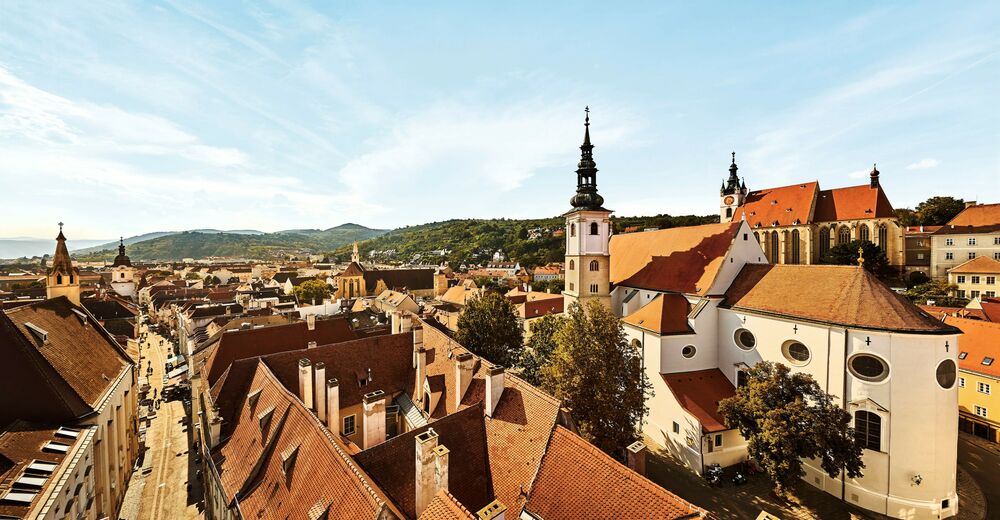
Venue: Kolpinghaus Campus Krems & Online (Zoom)
Language: German
Registration: Required, limited seats and free-of-charge
Culture Is Change | Culture For Change | Culture as Change
Our Vice President Thomas Aigner will participate in this symposium and research summit organised by the University for Continuing Education Krems (AT), the Club of Rome – Austrian Chapter (AT), future works – Club of Rome, Chapter Germany (DE) and the Museum Neukölln (DE) reflecting on “The digital Transformation of Cultural Heritage and Sustainability” against the backdrop of our Time Machine initiative. Additionally, Aigner will participate in the round table of the research summit discussing culture for sustainable development.
Food for Thought and Topics of the research summit
The Culture of Sustainability
The global North has put everything on one card: Progress – whatever the cost. A first global wake-up call – the 1972 Club of Rome Report on the Limits to Growth – went largely unnoticed without any operational consequences. Globalization, digitization, climate change, mobility and migration – and last but not least the corona pandemic and the Russian war of aggression against Ukraine have made us aware of the vulnerability of our cultures and infrastructures. At the same time, this experience made us aware of the great potential that culture and cultural-artistic experiences can hold in store for strengthening our mental and social resilience.
the Sustainability of Culture
Although the word sustainability is on everyone’s lips, there is still no binding, uniform, transdisciplinary agreement on the content of the term. Sustainability is usually viewed as the intersection of the economic, the ecological and the social. But what about the cultural-artistic; What about the sustainability of our immensely growing body of knowledge?
Culture, art and science are not only to be seen as biotopes worth protecting but also offer unused potential as real laboratories and catalysts for thinking out of the box. This requires the dissolution of traditional dichotomies between economics, the natural and engineering sciences and the arts: Only together can we develop answers to the questions that the future is already asking us today (future literacy).
Sustainability through Culture
The For Future movements have now also reached the scientific, cultural and museum sectors. It takes sustained [sic!] and resolute steps towards a globally and holistically oriented, responsible lifestyle; Culture and education are becoming the linchpin of future developments.
Knowledge – the know why? and not just know-how – is the raw material of the 21st century. With its two World Conferences, UNESCO has strengthened the importance of arts education for global developments and also for a growing understanding of sustainability. The role of education and culture was also included in the formulation of the 2030 Agenda for Sustainable Development of the United Nations. Education for Sustainable Development (ESD) is playing an increasingly central role in shaping a responsible life.
With the development of a Culture for Sustainable Development (KNE), we focus on the partnership-based, cross-generational and globally equitable interaction of people and the environment. Museums and universities can serve as innovative leading institutions (change agents) by combining their role as knowledge storage and knowledge generators with participation and inclusion to form a value-added chain for society as a whole.
Culture and creativity – as well as the ability to reflect and create meaning – make us human. The symposium and the Research Summit reflect on how culture can unfold its strategic potential for holistic, sustainable development in the future and how it can be anchored as the 18th SDG on the basis of a cultural understanding of sustainability.