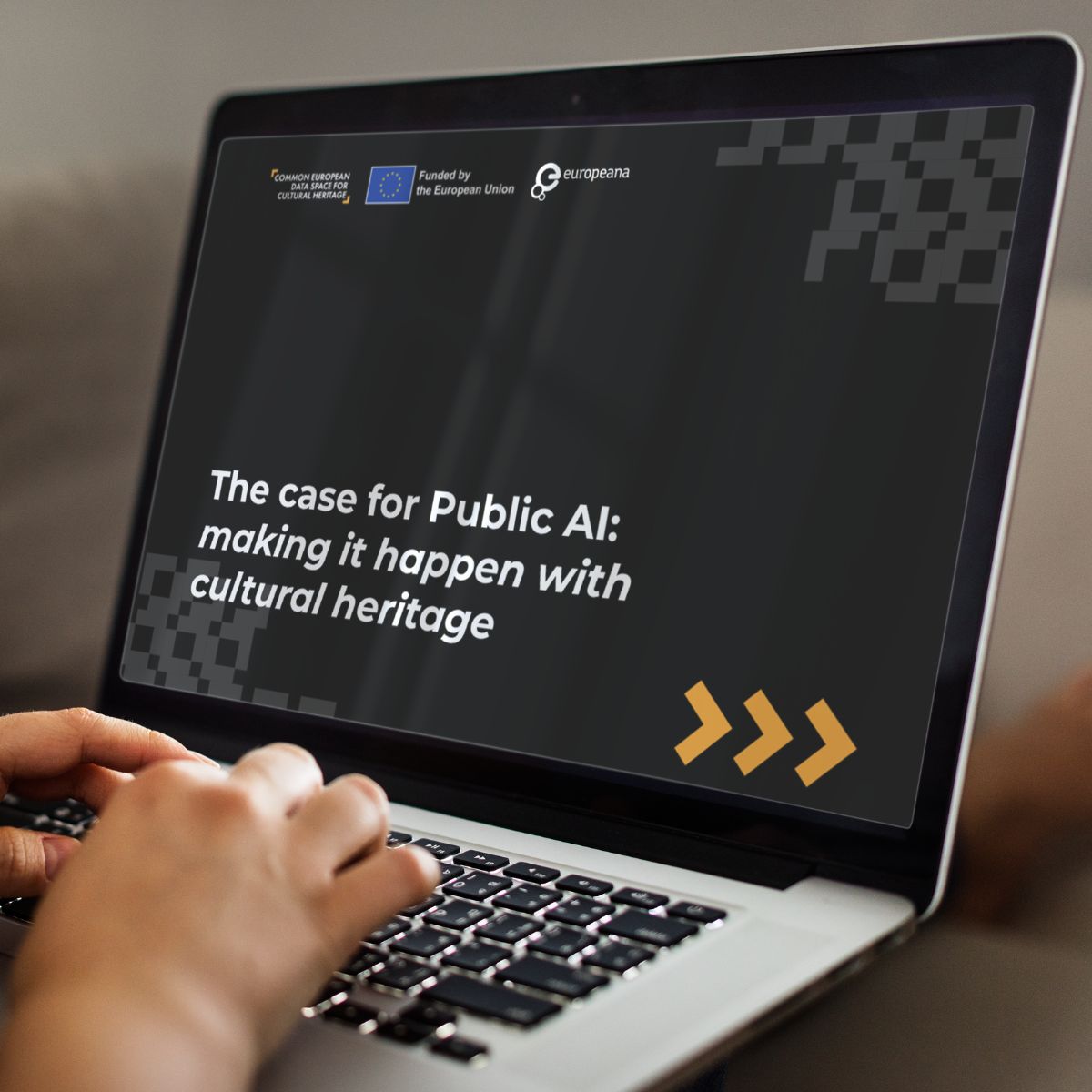
Artificial intelligence is rapidly transforming the way we access, understand, and interact with information. However, for AI to truly serve the public interest, it needs to be built on principles of openness, trust, transparency, and accessibility. The cultural heritage sector has a unique role to play in making this vision a reality.
A new publication from the common European data space of cultural heritage explores how Public AI can be developed and strengthened through the rich, diverse, and trusted resources of cultural heritage institutions across Europe.
“Making Public AI Reality: How Cultural Heritage Can Lead the Way” highlights the potential of cultural heritage data spaces as foundations for responsible AI development. By bringing together high-quality, interoperable, and meaningful data from museums, libraries, archives, and other cultural institutions, the sector can contribute to AI systems that are more inclusive, reliable, and aligned with societal values.
The publication underlines that cultural heritage is not only about preserving the past but it is also about shaping the future. Through open collaboration, shared infrastructures, and innovative technologies, cultural heritage communities can help ensure that AI development remains connected to human knowledge, creativity, and diversity.
The European cultural heritage data space provides an important environment for this transformation, enabling institutions, researchers, innovators, and citizens to access and reuse cultural heritage resources in new ways. These trusted ecosystems can support the development of AI applications while respecting principles such as transparency, ethical use, and accessibility.
This publication invites the community to explore the opportunities of Public AI and consider how cultural heritage can contribute to building AI systems that work for everyone.
Read the full publication “Making Public AI Reality: How Cultural Heritage Can Lead the Way” and share your thoughts on how cultural heritage can help shape the future of AI.
The publication is part of the work of the common European data space for cultural heritage, with Europeana as the main contact point for further information and engagement.