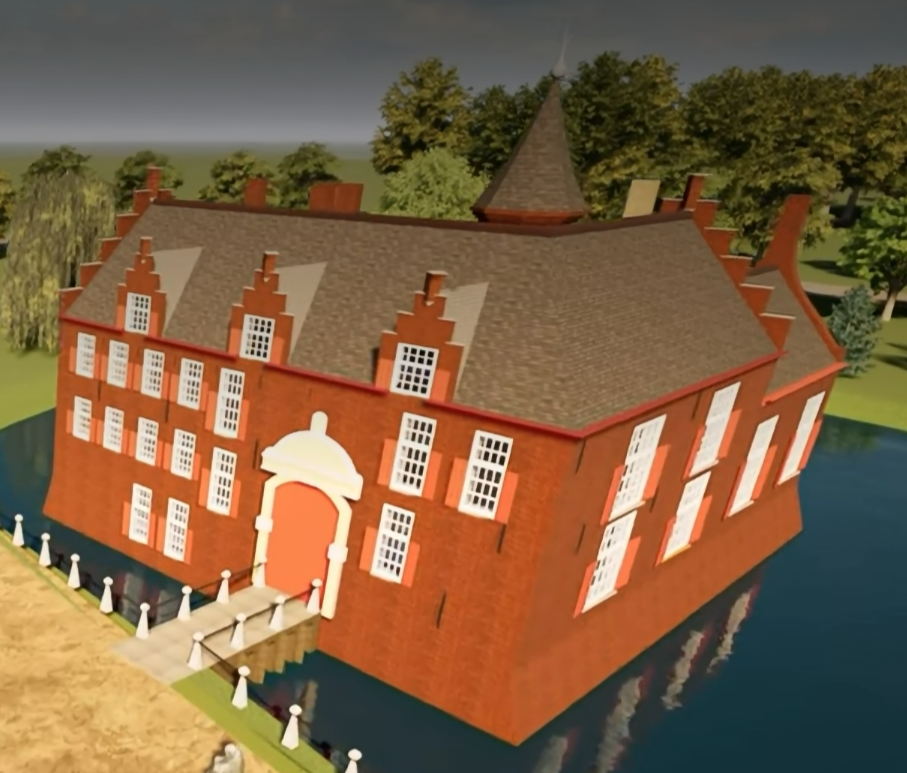
Digital storytelling continues to open new ways of engaging with Europe’s cultural heritage. A compelling example comes from the Netherlands, where the disappeared Kasteel de Emer in Breda has been digitally reconstructed and brought back to life through animation.
The project is hosted on Virtueel Princenhage, a platform dedicated to visualising local history and heritage sites. The animation offers a fictional yet historically inspired narrative of the castle, told from the perspective of its last inhabitant, creating a deeply immersive and human-centred storytelling experience.
Watch the animation here:
A castle that no longer exists
Although Kasteel de Emer has long disappeared from the physical landscape, the animation reconstructs its presence through a combination of historical interpretation and creative storytelling.
By blending visual reconstruction with narrative elements, the project transforms archival traces into an accessible digital experience allowing audiences to engage with heritage that would otherwise remain invisible.
Why this matters for digital heritage
This initiative demonstrates how digital heritage communication can go beyond documentation, using animation and narrative design to:
- Reconstruct lost or inaccessible heritage sites
- Create emotional and narrative engagement
- Make local history accessible to wider audiences
- Preserve intangible memories through storytelling
While the video is in Dutch, its visual language makes it accessible to international audiences interested in digital reconstruction and heritage interpretation.
A growing field of creative heritage innovation
Projects like this highlight the increasing importance of creative digital methods in heritage interpretation. They show how technology, storytelling, and historical research can come together to reimagine the past in meaningful and engaging ways.