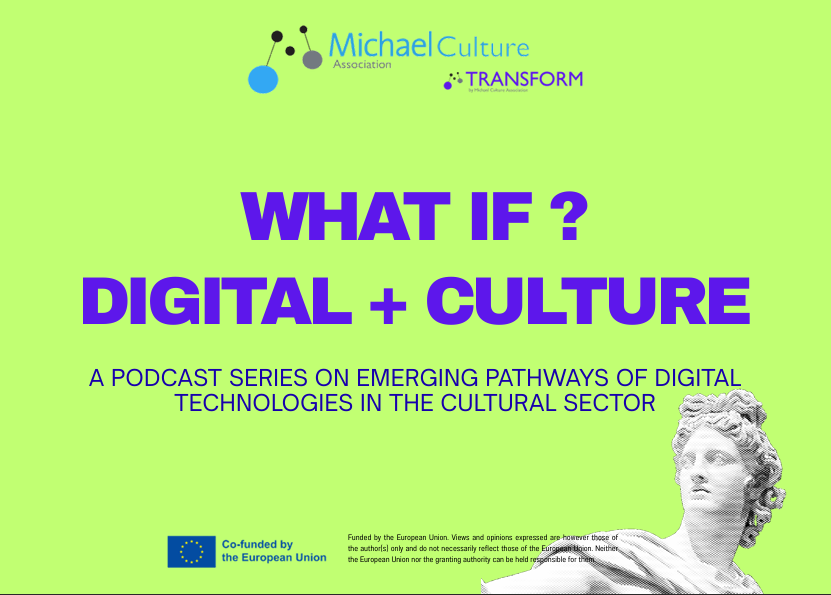
What does innovation mean for the cultural sector? How can cultural organisations embrace new technologies while safeguarding their independence, values and long-term sustainability?
The first episode of the podcast series What If? Digital Plus Culture, hosted by Marco Fiore from MCA, brings together Llouis Bonet and Marc Hernández Güell to explore these questions and discuss the opportunities and challenges shaping cultural innovation.
Innovation through collaboration and experimentation
The discussion approaches innovation as a continuous process of improving existing practices and creating meaningful value for society. Rather than relying exclusively on disruptive technologies, cultural innovation often develops incrementally through teamwork, experimentation and collaboration across different sectors.
The speakers also address the barriers that can prevent innovation, including institutional resistance to risk and the evolving regulatory landscape surrounding intellectual property.
Digital sovereignty and the future of cultural heritage
A central theme of the conversation is digital sovereignty. While the cultural sector has long advocated for openness and accessibility, its growing dependence on major technology platforms raises questions about autonomy, control over digital assets and the long-term preservation of digital heritage.
The speakers emphasise the importance of developing and investing in open digital infrastructures that allow cultural organisations to retain greater independence and participate in shaping their own digital futures.
Unlocking new possibilities through responsible AI
Artificial Intelligence also features prominently in the discussion. The speakers recognise its potential to unlock hidden information within archives and make cultural resources more accessible and discoverable. However, they stress that technological opportunities must be balanced with clear ethical boundaries and responsible implementation.
A human-centred vision for the future
Looking ahead, the conversation highlights the importance of balancing strong local cultural identities with international cooperation. It also calls for a human-centred approach to technological development, supported by public investment in open infrastructures that enable organisations of all sizes to adapt and evolve.
The discussion raises important questions for the cultural heritage community: how can we ensure that digital transformation strengthens cultural organisations rather than making them more dependent? And how can collaboration, openness and responsible innovation shape a more sustainable digital future?
At the Time Machine Organisation (TMO), these questions are particularly relevant to ongoing discussions about digital cultural heritage, data sovereignty, interoperability and the responsible use of emerging technologies.
Watch the first episode of What If? Digital Plus Culture and discover the full conversation: